Operating a successful food and beverage business in the UK requires a delicate balance of exceptional product quality, rapid customer service, and razor-sharp margin control. Whether you manage a bustling high-street coffee shop, a boutique hotel, a corporate office canteen, or a mobile catering unit, your choice of takeaway packaging directly impacts both your bottom line and your brand reputation.
For commercial operators, purchasing single sleeves of cups from a cash-and-carry is a fast track to squeezed profit margins. To run a truly efficient operation, businesses must transition to buying paper cups wholesale UK suppliers can provide at scale.
However, deciding to buy paper cups in bulk is only the first step. Navigating the commercial packaging market requires an understanding of materials, capacities, lid compatibility, and physical storage limitations. Ordering the wrong specification, or misjudging your volume requirements, can tie up vital cash flow in unusable stock.
This comprehensive guide by Touch A Sky is designed to walk commercial buyers through every stage of the wholesale purchasing process. We will explore how to estimate your usage, choose the right wall constructions, manage storage, and ultimately strike the perfect balance between price and quality.
Estimating Cup Requirements: Avoiding Over-Ordering
The most common mistake new business owners make when ordering wholesale disposable cups is guessing their volume. Guesswork inevitably leads to one of two outcomes: running out of cups halfway through a busy weekend shift, or over-ordering and sacrificing valuable cash flow and stockroom space.
To estimate your requirements accurately, you must rely on data. If you are an established business, pull a product mix report from your Point of Sale (POS) system for the last 30 days. Look specifically at your takeaway beverage sales. If you are a new business, you will need to forecast based on your projected daily footfall. A standard independent cafe might aim for 150 to 200 cups per day in its first year, whereas a high-footfall location near a train station could easily exceed 500 cups before lunchtime.
Factoring in Seasonality Your cup usage will not remain static throughout the year. As the UK moves into the summer months, your sales of hot teas and flat whites may dip, while demand for large iced lattes and fruit smoothies will surge. When planning a bulk order in April or May, ensure you increase your allocation for larger 12oz cups and transparent cold cups, while slightly tapering your smaller hot cup inventory.
The Cash Flow Balance Suppliers offer the best unit prices on larger pallet quantities. However, tying up thousands of pounds in packaging inventory that will take six months to use is poor cash flow management. A sensible commercial strategy is to order enough stock to cover four to six weeks of trading. This secures a healthy wholesale discount without crippling your liquid capital.
Choosing the Right Cup Sizes for Your Menu
When you browse bulk paper cups UK catalogues, you will be confronted with a vast array of sizes. Offering every size available is a logistical nightmare for your baristas and a drain on your inventory budget. Instead, businesses should curate a streamlined menu of sizes.
- 8oz Paper Cups: The undisputed champion of the specialty coffee scene. If your business prides itself on perfectly extracted flat whites, cortados, and small Americanos, the 8oz cup is essential. It restricts the milk volume, ensuring the coffee flavour cuts through perfectly.
- 12oz Paper Cups: The standard UK “regular”. If you serve traditional lattes, cappuccinos, hot chocolates, and standard takeaway teas, the 12oz size will likely be your highest volume seller.
Many successful independent cafes operate a simple two-size (8oz and 12oz) model. You can explore our full size range in the Touch A Sky.
Selecting Wall Construction: Insulation Matters
The construction of your commercial paper cups determines how comfortable the drink is to hold and how well it retains heat. As a commercial buyer, you must match the wall type to your specific menu.
Single Wall Cups Constructed from one layer of lined paperboard, single wall cups are the most cost-effective option. They are highly space-efficient as they nest tightly together. However, they offer very little heat insulation. If you serve piping hot teas or Americanos in single wall cups, you must purchase and apply separate cardboard sleeves (clutches) to prevent your customers from burning their hands. This adds a step to the barista’s workflow.
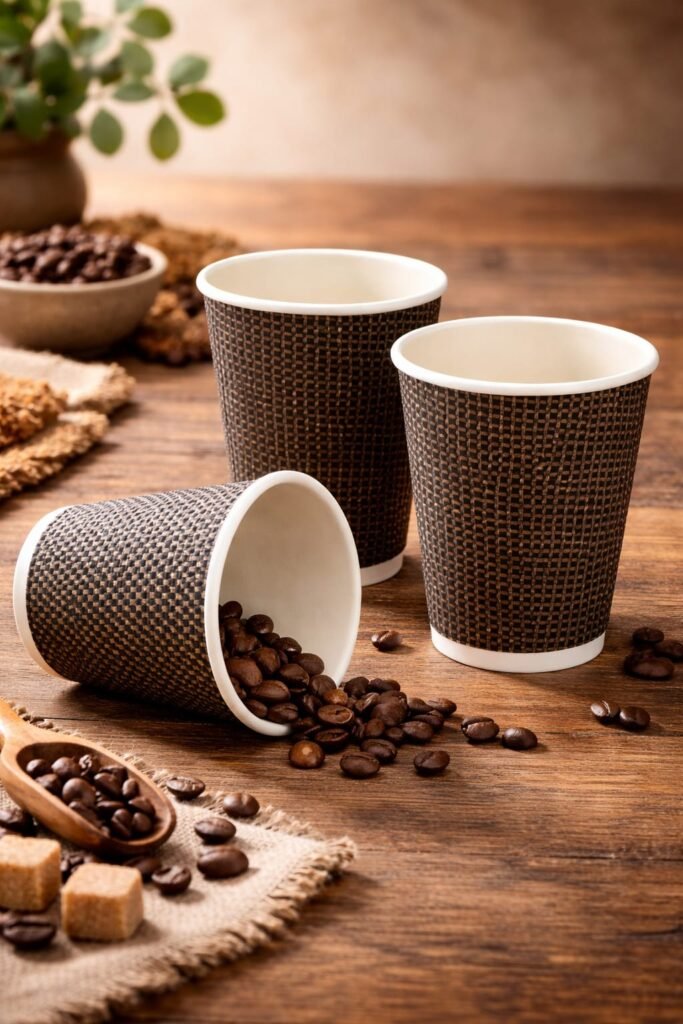
Double Wall Cups The industry standard for paper cups for cafes. Double wall cups feature an inner cup and an outer layer, separated by an insulating pocket of air. They keep drinks hot, remain comfortable to the touch, and eliminate the need for cardboard sleeves. Furthermore, the smooth exterior provides a flawless canvas for custom branding.
Ripple Wall Cups Ripple (or corrugated) cups feature a textured, wavy outer layer. They offer exceptional heat retention and a highly secure grip. They are heavily favoured by outdoor event caterers, mobile food trucks, and businesses that operate in harsh winter conditions where customers may be wearing gloves.
Matching Lids: The Secret to Smooth Operations
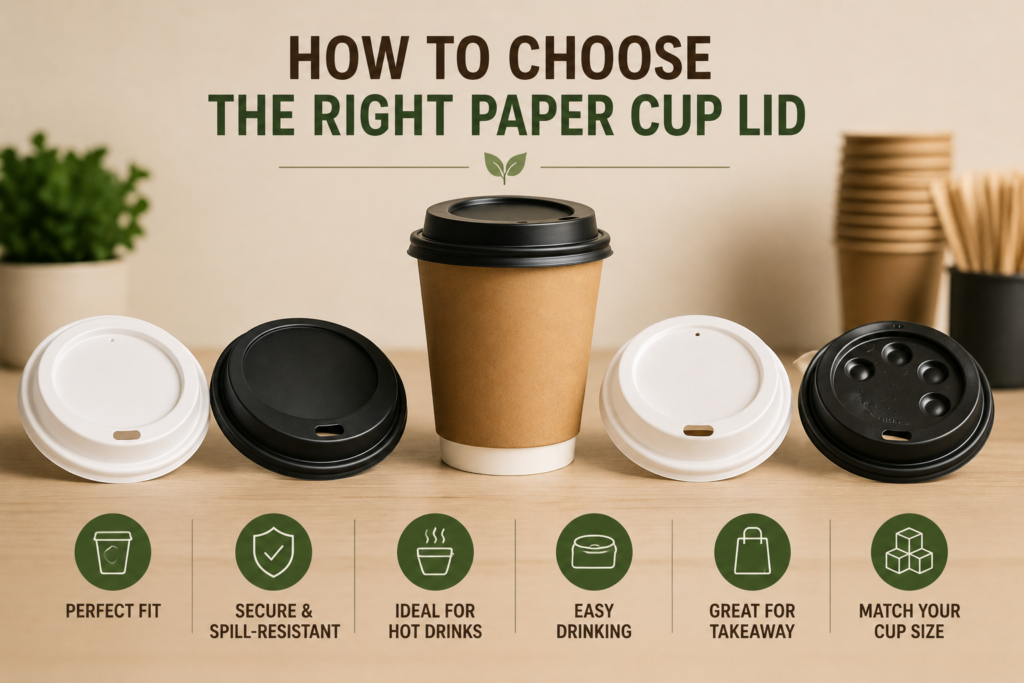
Ordering thousands of cups is useless if you do not have the correct lids to secure them. The most crucial factor when matching cups and lids is the rim diameter, measured in millimetres (mm).
Do not assume that all lids are universal. A lid that is even one millimetre too small will split when applied; a lid that is too large will leak hot liquid onto your customer.
To simplify your wholesale ordering, look for standardisation. In the commercial market, 10oz, 12oz, and 16oz cups frequently share a standard 90mm rim diameter. This is a massive operational advantage. It means you can buy one bulk case of 90mm lids to fit three different cup sizes, saving stockroom space and preventing baristas from scrambling for the right lid during a morning rush.
Conversely, smaller 8oz cups typically feature an 80mm rim diameter, meaning they will require their own dedicated lids. Always double-check lid compatibility on the product specifications before finalising your wholesale basket. You can find perfectly matched options in our [Paper Cup Lids] section.
Checking Product Specifications
When evaluating different suppliers, look beyond the price per unit and examine the physical product specifications.
- Seam Strength: A poorly glued side seam or a weak bottom seal will eventually fail when exposed to the heat and moisture of steamed milk.
- Rolled Rims: The rim of the cup must be tightly and evenly rolled. A flimsy rim will crush under the pressure of a lid being applied, compromising the seal and causing leaks.
- Material Coatings: Paperboard naturally absorbs water. Commercial cups rely on an inner lining (traditionally PE, or increasingly, aqueous and PLA options) to remain waterproof.
Packaging Quantities and Storage Requirements
Before placing a bulk order, you must understand how the products are packaged and whether you have the physical infrastructure to store them safely.
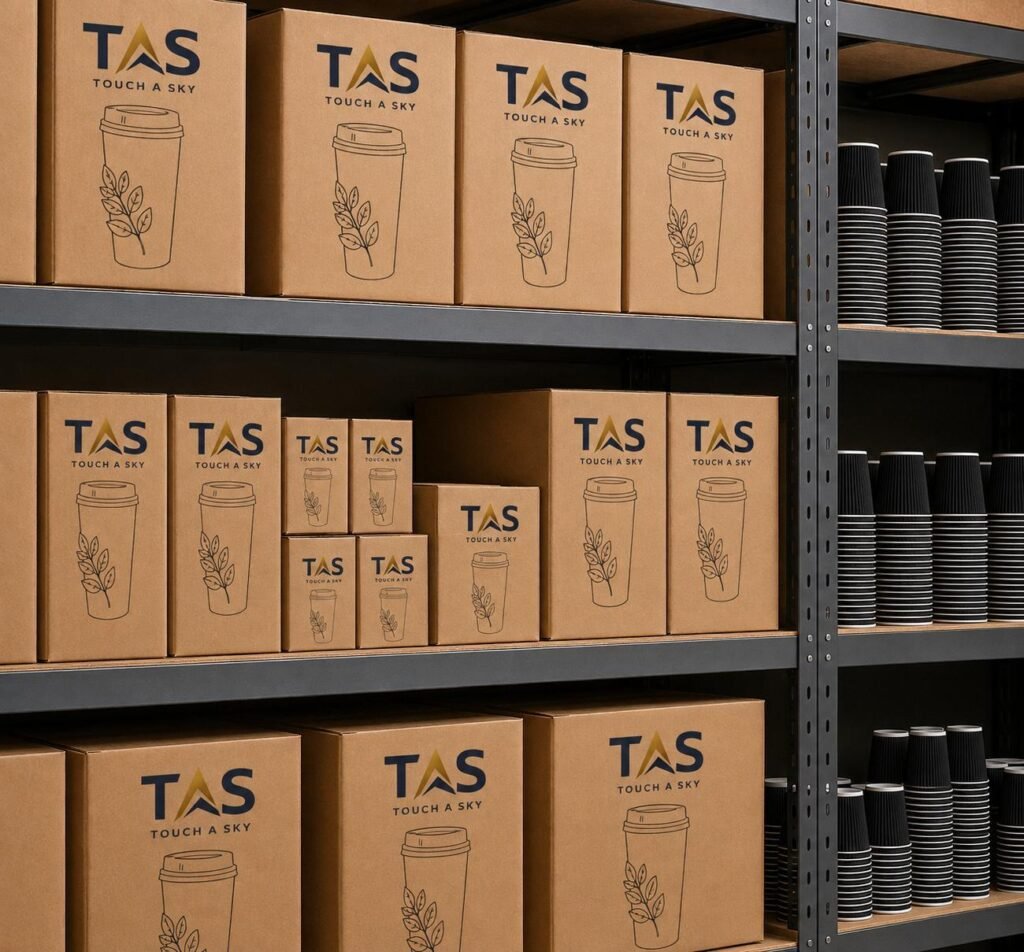
Packaging Formats Wholesale cups are typically packaged in internal plastic sleeves (e.g., sleeves of 25 or 50 cups) to maintain hygiene, which are then packed into outer corrugated cardboard cases (usually holding 500 or 1,000 cups per case). When ordering, check the case quantity to calculate your unit cost accurately.
Storage Environments Paper cups are highly sensitive to their environment. UK cafe stockrooms are often small, cramped, and occasionally damp.
- Moisture: Never store boxes of paper cups directly on a concrete floor or against a cold, damp wall. Cardboard absorbs moisture from the air, which can weaken the structural integrity of the cups inside before they are even used.
- Heat and Steam: Do not store cup inventory directly above your espresso machine or dishwasher. Constant exposure to steam and fluctuating temperatures can degrade the inner waterproof linings and cause the cups to warp, meaning lids will no longer fit securely.
- Stacking: Pay attention to the maximum stacking height printed on the outer cartons. Over-stacking heavy boxes will crush the cups in the bottom cases, resulting in deformed rims.
Balancing Price and Quality
It is tempting to simply search for the cheapest paper cups wholesale UK suppliers can offer. However, in the hospitality sector, cheap packaging often carries hidden costs.
Imagine you save half a penny on a cheaply manufactured cup. During a busy morning, a poorly rolled rim causes a lid to pop off, spilling a latte over a customer’s coat. The cost of replacing the drink, the potential cost of dry cleaning, the time your staff spend cleaning the floor, and the permanent loss of that customer’s business far outweigh the initial savings on the packaging.
Evaluate cups based on value rather than just the bottom-line price. A structurally sound double wall cup that provides a premium customer experience and speeds up your service is a worthwhile commercial investment.
Planning Repeat Purchases
Once you have found a reliable supplier and a product specification that works for your menu, establishing a repeat purchasing routine is crucial. Set a minimum stock threshold (PAR level) for your stockroom. For example, if you know you use two boxes of 12oz cups per week, you might set a rule that whenever inventory drops to three boxes, a new order must be placed. This guarantees you never run out of critical supplies during unexpected busy periods or bank holiday weekends.
Checklist: Before You Place a Bulk Paper Cup Order
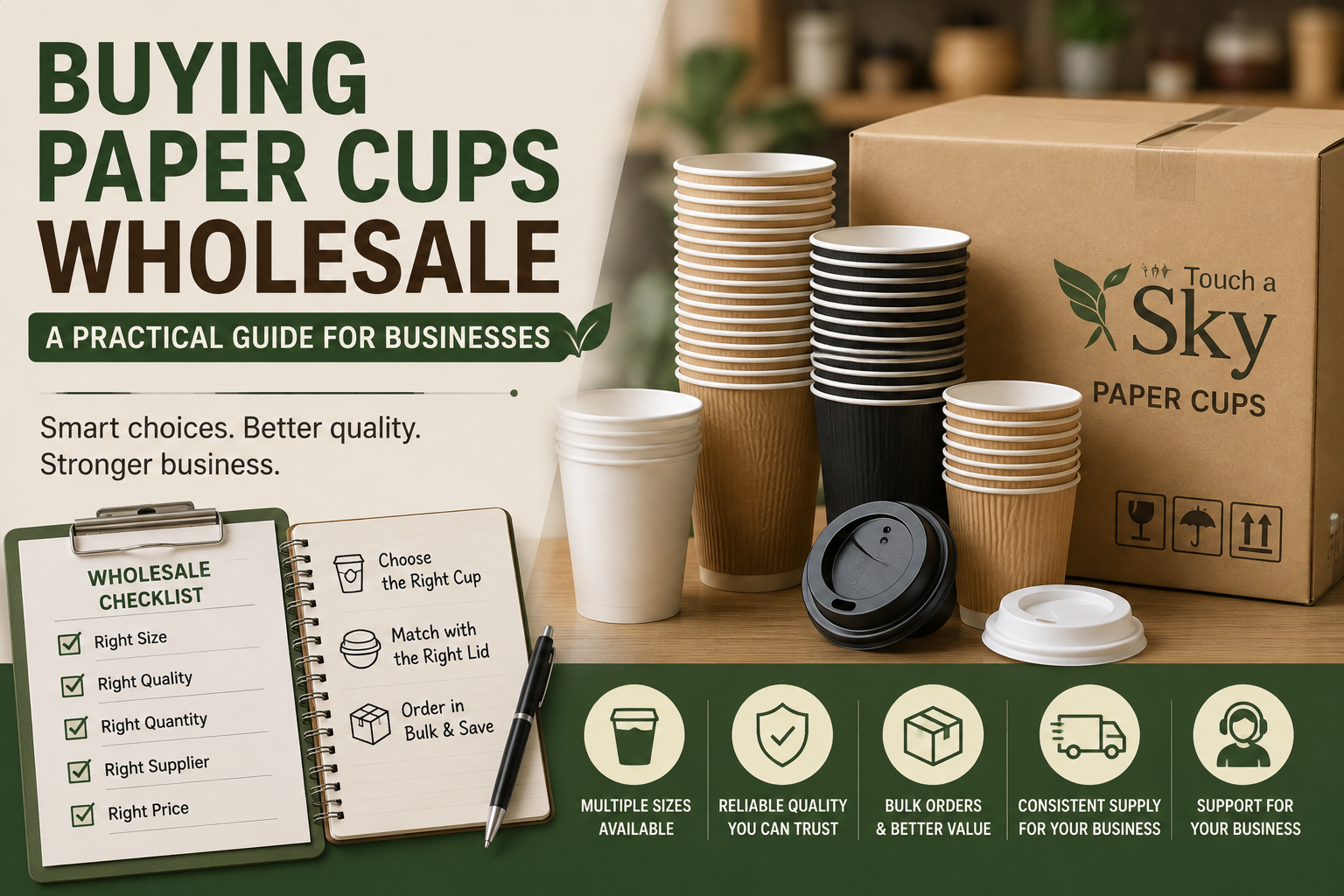
To ensure a smooth purchasing process, use this practical checklist before confirming your wholesale basket:
- Usage Forecast: Have I accurately estimated my cup usage for the next 4–6 weeks?
- Size Rationalisation: Have I chosen the correct sizes for my menu (e.g., 8oz for flat whites, 12oz for regular lattes)?
- Insulation Check: Does my hot drink menu require double wall or ripple cups, or will single wall suffice?
- Lid Compatibility: Have I matched the rim diameter (e.g., 80mm or 90mm) of my chosen cups to the correct lids?
- Storage Space: Do I have sufficient, dry, off-the-floor shelving space to accommodate the outer cases?
- Supplier Reliability: Can the supplier accommodate my reordering schedule consistently?
Conclusion
Purchasing wholesale disposable cups is a strategic decision that touches every aspect of a food and beverage business, from stockroom management and cash flow to barista workflow and brand perception. By accurately forecasting your needs, selecting the correct sizes and wall constructions, and ensuring perfect lid compatibility, you can elevate your takeaway service while protecting your profit margins.
At Touch A Sky, we are dedicated to supporting UK businesses with reliable, commercial-grade paper cups and lids. Whether you are stocking a new independent coffee shop or managing procurement for a large catering firm, our product ranges are designed to perform under pressure.
Ready to secure your packaging supply chain? [Contact / Get a Quote] today to discuss your wholesale requirements with the Touch A Sky team.
Frequently Asked Questions (FAQ)
1. How many paper cups are usually in a wholesale case? While packaging varies by manufacturer and cup size, commercial wholesale cases in the UK typically contain either 500 or 1,000 cups. These are usually divided internally into sealed hygienic sleeves of 25 or 50 cups for easy dispensing behind the counter.
2. Should I buy single wall or double wall paper cups in bulk? This depends entirely on your menu. If you primarily serve cold drinks, or if you are willing to use separate cardboard sleeves, single wall cups are more cost-effective and take up less storage space. If you serve a high volume of hot coffees and teas, double wall cups are highly recommended for customer safety and faster service.
3. Do I need to buy different lids for every cup size I order? Not necessarily. In the commercial market, 10oz, 12oz, and 16oz paper cups usually share a standard 90mm rim diameter, meaning one bulk box of 90mm lids will fit all three sizes. However, smaller 8oz cups usually have an 80mm rim and will require their own specific lids.
4. How should I store bulk paper cups in my cafe? Wholesale cups should be stored in their original outer cartons in a cool, dry environment. Keep boxes elevated off concrete floors to prevent moisture absorption, and store them away from areas with high heat or steam, such as directly above dishwashers or espresso machines, to prevent the cups from warping.
5. Is it cheaper to buy paper cups in bulk? Yes, purchasing paper cups wholesale directly from a supplier offers a significantly lower cost-per-unit compared to buying smaller retail packs from a cash-and-carry. Buying in bulk also reduces the frequency of ordering and protects your business from sudden supply shortages.