Knowing how to store paper cups correctly is one of those small operational details that only gets attention once something’s gone wrong — a delivery left near a radiator, a carton that’s been sitting on a damp stockroom floor, or a barista pulling out a sleeve of cups that have picked up a faint smell from the cleaning cupboard next to them. None of that is dramatic, but it’s avoidable, and it’s the difference between cups that perform the way they’re meant to and stock that’s quietly been degrading before it’s even reached a customer’s hand.
For cafés, restaurants, offices, caterers and takeaway businesses, paper cup storage isn’t complicated, but it does need a bit of thought. Cups are a food-contact item, they’re often bought in bulk, and they usually sit in storage for days or weeks before use. Getting the basics right protects hygiene, keeps cups looking and performing as they should, and means nobody’s caught out mid-rush with a carton that’s been stored somewhere it shouldn’t have been.
How to Store Paper Cups Correctly
The general principle is straightforward: keep paper cups somewhere cool, dry, clean and out of direct contact with the floor, in their original packaging until they’re needed. Beyond that, most storage problems come down to a handful of specific risks — moisture, contamination, heat and poor organisation — each worth addressing on its own.
Keep Paper Cups Away From Moisture
Paper cups are lined on the inside to hold liquid, but the outer paperboard and the cartons they’re packed in are not designed to cope with damp conditions — worth bearing in mind if you’re not already familiar with what paper cups are made of and how the different layers behave. Storing cups near sinks, dishwashers, external doors, or in a stockroom prone to condensation can leave cartons weakened, cups sticking together, or the printed surface marking. Moisture is one of the more common causes of stock being written off before it’s even used, simply because it was stored in the wrong spot rather than because of any fault with the cups themselves.
Protect Cups From Dust and Contamination
Cups should stay in their sleeves and cartons until they’re actually needed at the point of service. Leaving open stacks of cups exposed on shelving, particularly near food prep areas, bins, or cleaning chemicals, risks dust settling on the rim or the cup picking up odours from nearby products. This matters for paper cup hygiene generally, but it’s especially relevant for the rim and inner surface, since that’s the part that will be in direct contact with a customer’s mouth and drink.
Avoid Excessive Heat and Direct Sunlight
Heat sources such as ovens, grills, radiators, or a stockroom window that gets strong afternoon sun can affect both the cup and its packaging over time. Consistently warm storage can soften the internal lining or cause cartons to weaken, while direct sunlight can fade printed branding on the outside of the cup. Storing stock in a stable, ambient temperature area away from these sources is a simple way to avoid the problem entirely.
Keep Cartons Elevated From Floors
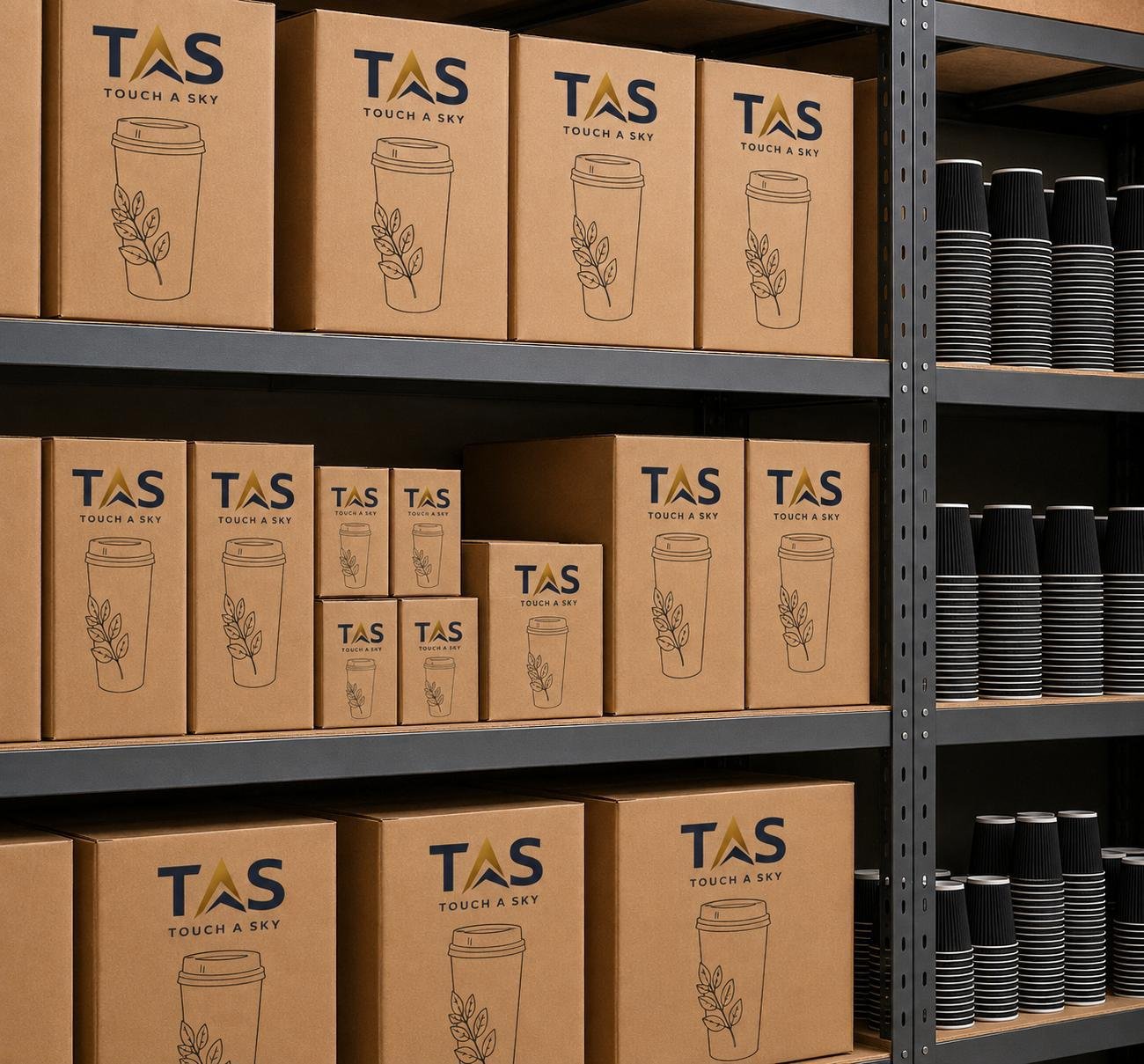
Cartons left directly on the floor are more exposed to ground moisture, spills, pests and general knocks than stock kept on shelving, racking or pallets. Raising cartons even a small amount off the floor also makes it easier to keep the storage area clean underneath, rather than working around boxes that can’t easily be moved.
Organise Different Cup Sizes
Most businesses running more than one drink size — commonly 8oz and 12oz — benefit from storing each size in a clearly labelled, separate section rather than stacking cartons together. This matters more than it sounds: during a busy service, staff need to be able to grab the right size cup and matching lid without stopping to check, and mixed or poorly labelled stock is a common source of mistakes at the till or the coffee machine.
How Businesses Should Store Bulk Quantities
Businesses ordering in bulk should set aside a dedicated dry storage area separate from day-to-day front-of-house stock, and work on a first-in, first-out basis so older deliveries are used before newer ones. It’s also worth being realistic about storage capacity when placing bulk paper cup orders — cups stored well in a smaller quantity generally hold up better than a large order squeezed into a space that wasn’t really built for it.
Common Paper Cup Storage Mistakes
A few storage mistakes come up repeatedly across cafés and catering businesses. Cartons get stacked too high and start to crush under their own weight. Sleeves are left unwrapped on open shelving instead of resealed or kept in their carton. Stock is stored on the floor of a stockroom that occasionally floods or gets a wet mop run through it. Different sizes get mixed into the same storage space, making it harder to find the right cup quickly. None of these are difficult to avoid once they’re on your radar, but they’re easy to overlook in a busy kitchen or back-of-house area.
How Long Can Paper Cups Be Stored?
Paper cups aren’t a perishable item in the way fresh food is, so there’s no strict short shelf life to work around. That said, stock stored for an extended period, especially in less-than-ideal conditions, can still be affected by the moisture, heat and contamination risks covered above. The safest approach is to rotate stock so older deliveries are used first, store cups properly throughout that time, and check the packaging for any date coding or handling guidance from your supplier rather than assuming cups will stay in perfect condition indefinitely regardless of how they’re kept.
Best Storage Setup for Cafés and Restaurants
A dry storage room or dedicated cupboard close to, but not directly inside, the main service area tends to work well for most cafés and restaurants stocking a range of paper cups across sizes. Open shelving or racking keeps cartons off the floor and makes stock easy to see and rotate, while labelling by cup size and drink type saves time when staff are restocking under pressure. The goal is a setup where whoever’s on shift can find and grab the right cups quickly, without digging through mixed or poorly organised boxes.
Preparing Cups for Busy Service Periods
Ahead of a known busy period, it’s worth moving enough stock from bulk storage into front-of-house dispensers or easy-access shelving so staff aren’t opening fresh cartons mid-rush. Checking that lids are matched and within reach of the corresponding cup size ahead of time also avoids last-minute scrambling. This kind of preparation is a small task when done calmly beforehand, and a much bigger problem when it’s left until the queue’s already out the door.
Choosing Suitable Packaging and Quantities
When ordering, it’s worth matching order quantities to both usage rate and available storage space, rather than ordering the largest quantity available purely for a lower per-unit cost. Cups that sit in storage for months because they were over-ordered are more exposed to the risks already covered in this guide, so a slightly smaller, more frequent order can work out better in practice than one large delivery that outpaces how quickly it’s used.
Practical Storage Checklist
| Storage Factor | Good Practice |
|---|---|
| Location | Cool, dry, clean area away from sinks, ovens and direct sunlight |
| Packaging | Keep cups in original sleeves and cartons until needed |
| Floor contact | Store on shelving, racking or pallets, not directly on the floor |
| Stock rotation | Use older deliveries first (first in, first out) |
| Sizing | Label and separate different cup sizes (8oz, 10oz, 12oz, 16oz) |
| Nearby hazards | Avoid storing near cleaning chemicals, bins or strong odours |
| Order quantity | Match order size to realistic usage and available storage space |
| Pre-service prep | Move working stock to front-of-house access points ahead of busy periods |
Frequently Asked Questions
How should paper cups be stored? In a cool, dry, clean area, off the floor, in their original packaging, away from moisture, heat sources and strong odours until they’re needed for service.
Can paper cups be stored in a garage or unheated area? It depends on the conditions. An unheated space that stays dry and free from damp or extreme temperature swings can work, but a garage prone to condensation, pests or direct sun through a window is best avoided.
How long do paper cups last in storage? There’s no fixed shelf life, but stock should still be rotated and stored properly rather than left indefinitely, and any guidance on the packaging from your supplier should be followed.
Can paper cups get damp? Yes. While the inside of the cup is lined to hold liquid, the outer paperboard and cartons can still be affected by damp storage conditions, which can weaken the cup or the packaging around it.
Should different cup sizes be stored separately? It’s good practice. Keeping 8oz, 10oz, 12oz and 16oz stock clearly separated makes it faster and easier for staff to grab the right size during service.
Is it okay to store paper cups near cleaning products? It’s best avoided. Strong-smelling chemicals stored nearby can transfer odours to cups, particularly if they’re not sealed in their original packaging.
What’s the best way to store paper cups in a small café? A dedicated dry cupboard or shelving unit close to the service area, with stock labelled by size and rotated regularly, works well even in a limited space.
Do paper cups need to be kept in their original packaging? Yes, ideally until the point of use. The sleeve and carton protect cups from dust, moisture and contamination while they’re in storage.