
Ask most people what paper cups are made of and you’ll get one answer: paper. That’s not wrong, but it’s only half the story. A disposable coffee cup handed over a café counter is a small piece of engineering — a combination of paperboard, an internal lining, and sometimes a textured outer wrap, each doing a specific job so a hot drink stays hot, a cold drink stays cold, and the cup itself doesn’t buckle in your hand.
For cafés, restaurants, offices, caterers and takeaway businesses, understanding paper cup materials isn’t just background knowledge. It affects which cups hold up to a flat white without going soft, which ones are genuinely food safe, and which construction is worth paying slightly more for. This guide walks through what paper cups are made of, layer by layer, so you can order with more confidence.
What Are Paper Cups Made Of?
A disposable paper cup is built from two core components: a paperboard shell and an internal barrier lining. On its own, paperboard is absorbent — left untreated, it would soak up liquid within seconds and lose its shape. So manufacturers bond a thin, food-grade lining to the inside surface of the board before the cup is cut, shaped and seamed.
The paperboard used for cups isn’t the same as standard printing or packaging paper. It’s a heavier, food-grade paperboard designed to hold its form when filled, folded into a seam, and gripped by hand without collapsing. This board also carries any branding or printed design on the outside of the cup.
The internal lining, most commonly a thin layer of polyethylene (PE), is applied through an extrusion coating process that fuses a microns-thick plastic film to the paperboard. This is what actually makes the cup waterproof. Without it, the paper cup lining would fail within a minute or two of contact with a hot drink, and the outer paperboard would start to feel damp and weak.
Together, these two layers do different jobs: the paperboard gives the cup its rigidity, shape and printed surface, while the lining keeps liquid where it belongs. A well-made cup balances both — sturdy enough not to bend, but not so thick that it becomes wasteful or awkward to stack.
The Main Materials Used in Paper Cups
Breaking the cup down further, there are several distinct materials at work in most disposable paper cup materials, each with a specific role.
Paperboard
Paperboard is the structural backbone of the cup. It’s typically made from virgin wood pulp or a blend that includes recycled fibre, chosen for strength, printability and consistency. Cup-grade paperboard needs to fold cleanly around a mandrel to form the body and base without cracking, hold a curled rim without splitting, and stay rigid enough when filled that the cup doesn’t sag or lose its shape in the hand.
Internal Barrier or Lining
The lining is the part doing the real work of containing liquid. Polyethylene is the standard choice across most UK paper cup ranges because it’s reliable, food-safe and bonds well to paperboard during high-speed manufacturing. Some ranges use a PLA-based lining instead, derived from plant starches rather than petroleum. Either way, this barrier layer is what separates a genuine food-grade paper cup from a plain printed card that would fall apart on contact with a drink.
Ripple or Textured Outer Layer
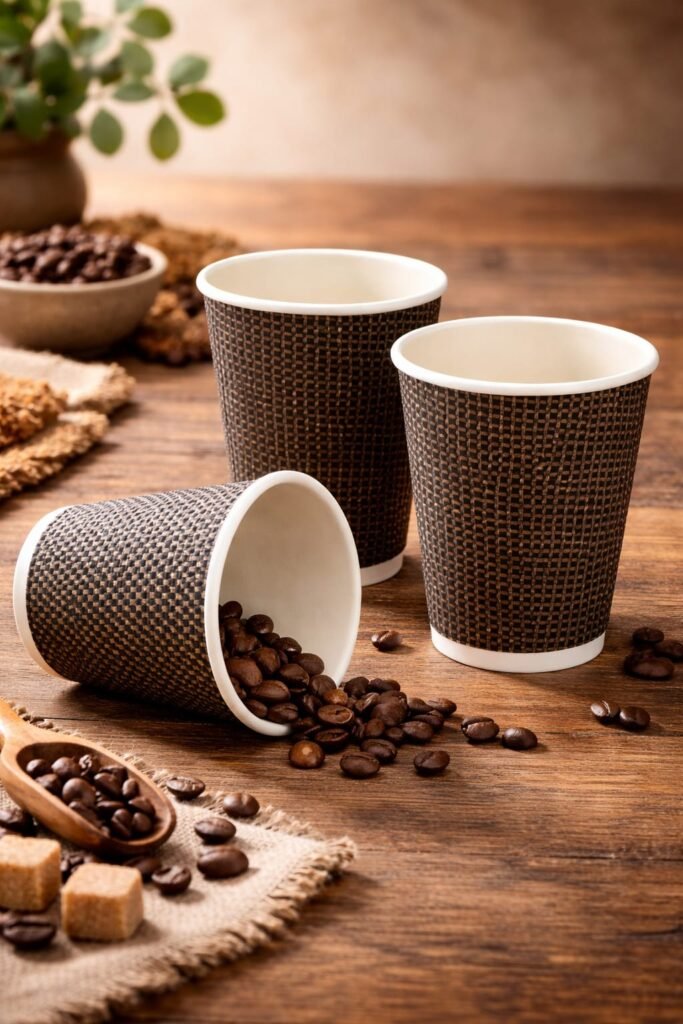
On ripple wall cups, a second layer of corrugated (fluted) paper is wrapped around the outside of the cup and fixed to the single-wall body. The fluting creates small pockets of trapped air between the two layers, which is what gives ripple cups their insulating feel and slightly grippy texture without needing a separate cup sleeve.
Adhesive and Sealing Components
Cups are held together at two points: the side seam, where the flat blank is rolled into a cylinder, and the base seam, where the bottom disc is fitted into the sidewall. In most modern cups, sealing is done by heat and pressure rather than a separate glue — the lining itself melts slightly and re-bonds — though some constructions use small, food-safe adhesive points too. A poorly sealed side or base seam is one of the most common causes of a leaking cup.
Cup Lids
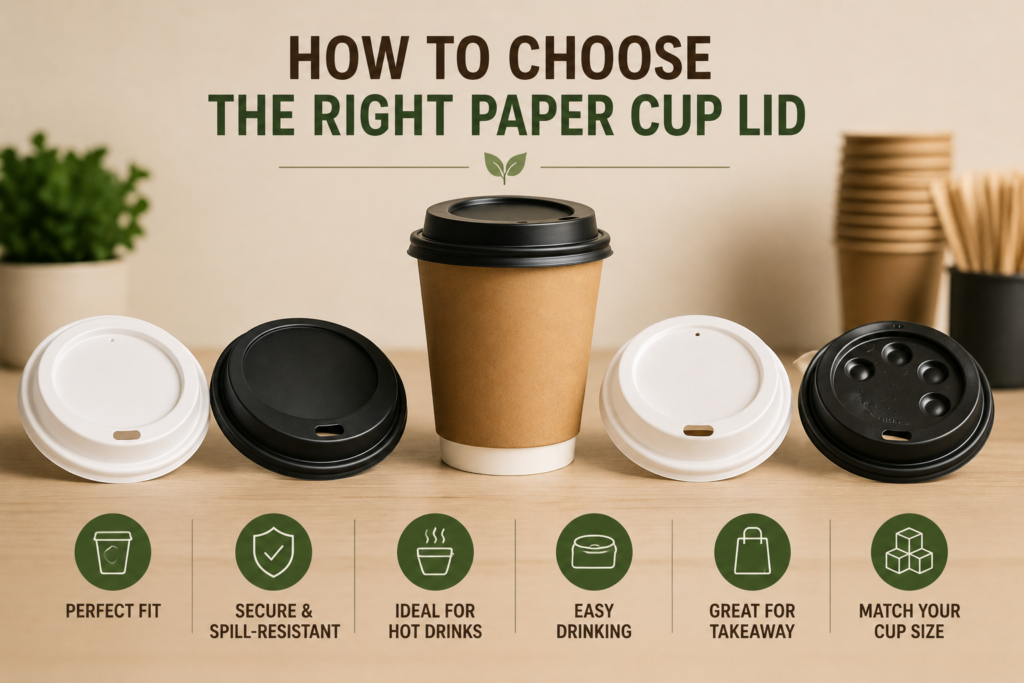
Lids aren’t part of the cup’s own construction, but they’re a closely related material choice. Flat sip lids, domed lids and resealable drink-through lids are usually moulded separately and sized to match specific cup diameters, so it’s worth checking matching paper cup lids against the cup range you’re using, particularly across single wall, double wall and ripple ranges where rim sizes can vary slightly.
Single Wall vs Double Wall vs Ripple/Triple Wall
Once you understand the base paper cup construction, the next decision is usually which wall type suits the drink and the business. Each type uses the same core materials — paperboard and lining — but arranges them differently.
Single wall paper cups are the simplest construction: one layer of lined paperboard. They’re light, inexpensive and well suited to cold drinks, water, or vending use, but for hot drinks they usually need a separate cup sleeve, since the outer surface heats up quickly.
Double wall paper cups use two layers of paperboard bonded together, either as a genuinely separate inner and outer wall or as a single thicker board folded to create a similar effect. The extra layer adds insulation and rigidity, meaning the cup can be held comfortably without a sleeve, which makes double wall a popular default for coffee shops serving drinks to go.
Ripple wall paper cups (sometimes called triple wall) add a corrugated paper layer to a single wall cup rather than a second flat layer. The fluted structure traps air and creates a textured grip, giving strong insulation and a premium feel, which is why ripple cups are common in specialty coffee shops and branded retail settings.
| Feature | Single Wall | Double Wall | Ripple / Triple Wall |
|---|---|---|---|
| Construction | One layer of lined paperboard | Two bonded paperboard layers | Corrugated layer fused to a single wall cup |
| Insulation | Minimal on its own | Good | Very good |
| Heat protection | Needs a sleeve for hot drinks | Comfortable without a sleeve | Comfortable without a sleeve |
| Grip | Can feel hot with strong drinks | Sturdy, even grip | Textured, non-slip grip |
| Typical use | Cold drinks, vending, water | Everyday hot drinks to go | Specialty coffee, premium branding |
| Suitability for hot drinks | Only with an added sleeve | Well suited | Very well suited |
Why Food-Grade Materials Matter
Not every paperboard or lining is suitable for a cup that will hold something to eat or drink, which is why food-grade paper cups matter more than they might seem to at first glance.
Food-contact requirements mean every layer of the cup — the board, the lining, the printing inks and any adhesive — has to be assessed and manufactured as safe for direct contact with food and drink, not just treated as a general packaging material.
Hygiene is protected through sealed sleeve packaging and cup design that keeps the inside surface untouched until use, which matters in busy environments where cups are handled quickly.
Heat resistance is about the lining and board holding their integrity against near-boiling liquid without softening or letting heat through too fast to hold comfortably.
Leak resistance comes down to consistent lining coverage and properly sealed seams — a cup that’s fine when cold can still fail under a hot filled drink if either is inconsistent.
Because these properties aren’t always visible from the outside, sourcing paper cups for hot drinks from a supplier with consistent, traceable manufacturing matters more than it would for less demanding packaging.
What Makes a Good Quality Paper Cup?
A handful of practical details separate a cup that performs well from one that lets a business down at the worst moment:
- Strong paperboard that holds its shape when filled and doesn’t flex or buckle under a firm grip.
- Reliable construction with even lining coverage across the whole interior surface, not just the base.
- Secure seams, both at the side and the base, that stay sealed under heat and handling.
- Suitable lining matched to the drink type and temperature the cup is meant for.
- A stable rim that’s curled evenly, so it doesn’t crack, cut a customer’s lip, or stop a lid from fitting properly.
- Comfortable grip, usually via double wall or ripple construction for hot drinks.
- Appropriate size for the drink being served, with enough headspace for lids and milk without excess waste.
Choosing the Right Paper Cup for Your Business
Cup size is where a lot of the practical decision-making happens, and it depends more on drink type and serving style than on personal preference. Common UK sizes include:
- 8oz paper cups — well suited to espresso-based drinks like flat whites and macchiatos, or as a standard hot drink size in offices and small workplace kitchens.
- 12oz paper cups — often the default café size for lattes, cappuccinos and larger flat whites.
The right choice depends on what’s actually being served, whether drinks are made to order or self-served, and how the cup fits into existing lid and sleeve stock. A specialty café pouring layered lattes has different needs to an office running a self-service vending machine, even though both might reach for a 12oz cup by default.
Touch A Sky’s range of paper cups covers single wall, double wall and ripple construction across these common sizes, along with matching lids, which makes it easier to keep sizing and construction consistent across a menu rather than mixing cup types drink by drink. For businesses weighing up insulation against cost, comparing double wall paper cups against ripple wall options side by side is usually more useful than picking on price alone.
Frequently Asked Questions
What are paper cups made of? A paperboard shell combined with a thin internal lining, usually polyethylene or a PLA-based alternative, that makes the cup waterproof. Some cups also have a corrugated outer layer for extra insulation.
Are paper cups food safe? Genuine food-grade paper cups are manufactured from board, linings, inks and adhesives that are all assessed as suitable for direct food and drink contact, and they’re packed and sealed to stay hygienic until use.
What is the lining inside a paper cup? Most commonly a thin polyethylene (PE) coating bonded to the inside of the paperboard. Some ranges use a PLA lining instead, made from plant-based material rather than petroleum-based plastic.
What is the difference between single wall and double wall cups? Single wall cups have one layer of lined paperboard and usually need a sleeve for hot drinks. Double wall cups use two bonded layers for extra insulation and rigidity, so they can be held comfortably without a sleeve.
Are paper cups suitable for hot drinks? Yes, provided the construction matches the drink. Double wall and ripple wall cups are designed specifically for hot drinks, while single wall cups are better suited to cold drinks unless paired with a sleeve.
Which paper cup material is best for cafés? Most cafés use double wall or ripple wall cups for hot drinks because of the added insulation and grip, reserving single wall cups for cold or iced drinks where insulation matters less.
How should paper cups be stored? Paper cups should be kept in their original sleeves or packaging, in a clean, dry area away from direct heat or moisture, until they’re needed, to protect the lining and printed surface before use.