The UK foodservice and takeaway industry moves at a rapid pace. Whether you are running an independent coffee shop in a busy city centre, managing catering for corporate events, or operating a high-volume restaurant, the packaging you choose directly impacts your customer experience. Amongst all the packaging decisions a hospitality operator must make, selecting the right disposable paper cups is arguably one of the most critical.
The humble paper cup is often the only physical connection a customer has with your brand after they leave your premises. If a cup is too hot to hold, if the lid leaks onto their clothing, or if the structural integrity fails during their commute, that negative experience reflects entirely on your business.
This comprehensive guide, created by Touch A Sky, is designed to help operators navigate the market. We will explore everything you need to know about disposable coffee cups, from understanding the subtle differences in capacity and insulation to purchasing paper cups wholesale UK businesses can rely on.
What Are Disposable Paper Cups?
At their core, disposable paper cups are single-use beverage containers manufactured specifically for the food and drink sector. They are constructed primarily from paperboard, which provides the necessary structural rigidity to hold liquid without collapsing.
However, raw paperboard alone cannot hold liquids; it would simply absorb the moisture and disintegrate. To prevent this, paper cups for businesses are lined with a thin, impermeable barrier. Traditionally, this barrier is made from Polyethylene (PE), though advancements in packaging technology have introduced alternatives like Polylactic Acid (PLA) and aqueous (water-based) coatings to manage liquid retention.
The manufacturing process involves tightly rolling the coated paperboard into a cylinder, sealing the side seam with heat, and attaching a robust bottom disc. A tightly curled rim is then formed at the top of the cup. This rolled rim serves a dual purpose: it provides a comfortable drinking edge for the customer and creates a secure anchor point for lids to snap onto, preventing accidental spillages.
Understanding Paper Cup Sizes: Why Size Matters
In the world of specialty coffee and catering, cup capacity is not just about giving the customer a larger drink; it is about protecting the precise recipes that your baristas have been trained to pour. Using the wrong size cup can completely alter the ratio of espresso to textured milk, resulting in a weak or overly milky beverage.
When establishing your takeaway menu, you must carefully align your recipes with standard industry sizes.
8oz Paper Cups
The [8oz Paper Cups] are the cornerstone of the modern UK specialty coffee scene. Holding approximately 227ml of liquid, this size is the absolute standard for flat whites, small lattes, and standard Americanos. Because an 8oz cup tightly contains a standard double shot of espresso and a small volume of micro-foamed milk, it ensures the coffee flavour cuts through perfectly. It is also an excellent size for children’s hot chocolates or serving small teas at outdoor events.
12oz Paper Cups
If a customer orders a “regular” or “medium” latte, cappuccino, or mocha in most UK high street chains, they are usually handed a 12oz cup. The [12oz Paper Cups] (approx. 340ml) allow for a substantial serving of milk, making them ideal for sweeter, milk-heavy drinks or filter coffees. Takeaway businesses serving soups or hot broths also frequently utilise the 12oz size for small food portions.
Single Wall, Double Wall, Triple Wall and Ripple Cups
Beyond the volume capacity, the construction of the cup wall is the next major decision. The wall type determines how well the cup retains heat and, crucially, how hot the outside of the cup gets when held by the consumer.
Single Wall Paper Cups
As the name suggests, single wall cups are constructed from one layer of lined paperboard. They are lightweight, stack very tightly, and are highly cost-effective.
- When to choose them: Single wall cups are ideal for cold drinks, water coolers, or room-temperature beverages. If a cafe chooses to use single wall cups for hot drinks to save on unit costs, they must purchase cardboard cup sleeves (clutches) to slip over the cup, protecting the customer’s hands from the heat.
Double Wall Paper Cups
Double wall cups feature an inner cup and an outer layer of paperboard, separated by a tiny pocket of insulating air. This thermal gap prevents the intense heat of boiling water or steamed milk from transferring to the exterior.
- When to choose them: These are the standard takeaway paper cups for cafes across the UK. They eliminate the need for separate cardboard sleeves, streamlining the barista’s workflow during busy morning rushes and providing a smooth, comfortable surface for the customer to hold.
Triple Wall / Ripple / Textured Cups
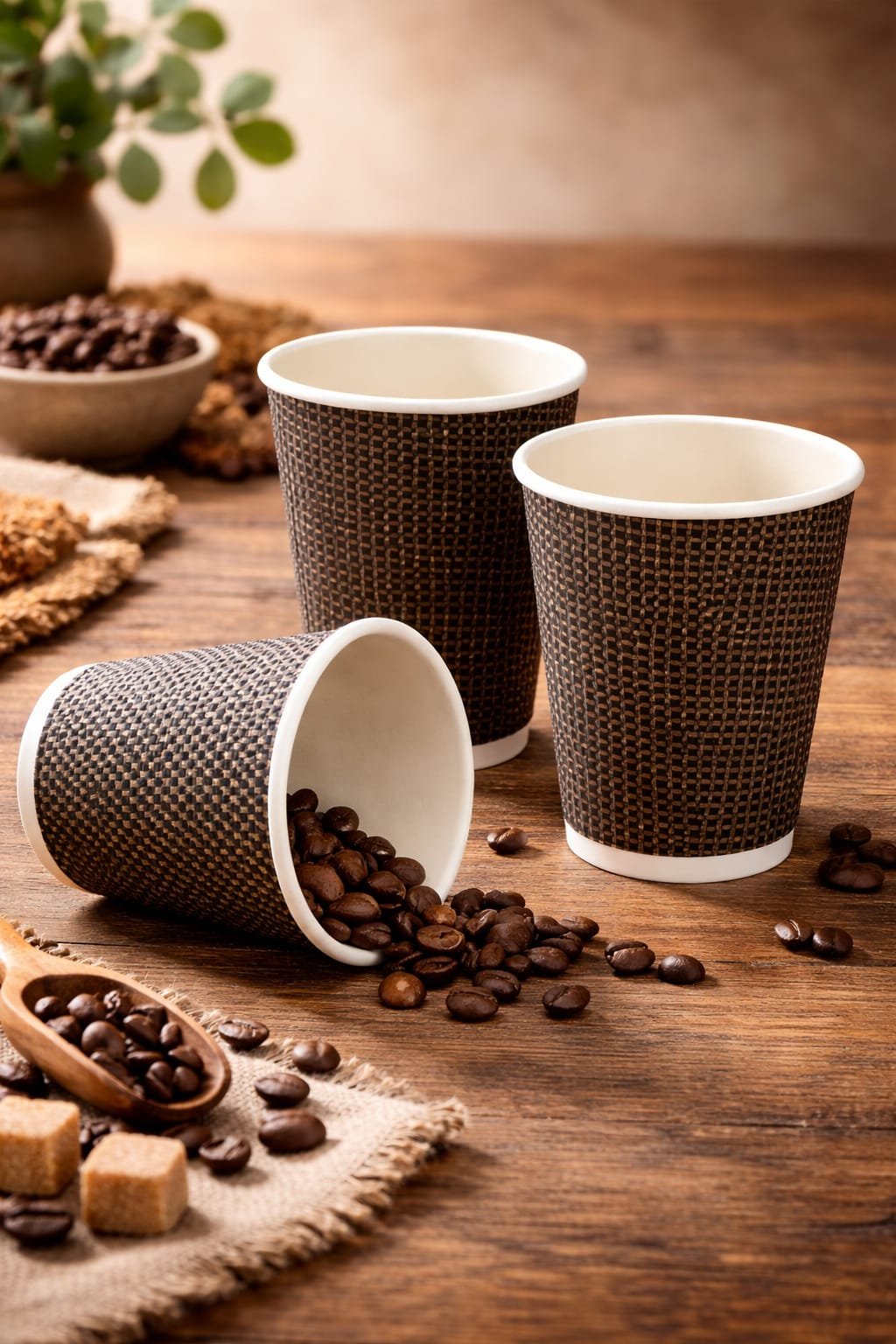
Ripple cups take insulation a step further. They feature an inner wall, a middle layer, and a textured, corrugated outer layer (the ripple).
- When to choose them: Ripple cups are chosen by businesses that want to offer maximum heat retention—ideal for outdoor events in winter, food trucks, or cafes serving drinks made with boiling water (like tea and Americanos). The corrugated texture also provides an excellent grip, reducing the risk of the cup slipping from a gloved or wet hand.
Cup Type Comparison Table
| Feature | Single Wall | Double Wall | Triple Wall / Ripple |
|---|---|---|---|
| Layers of Board | 1 | 2 | 3 (including corrugated outer) |
| Insulation Level | Low | High | Maximum |
| Best Used For | Cold drinks, water, warm drinks | Hot coffees, lattes, standard hot drinks | Boiling teas, outdoor winter catering |
| Cardboard Sleeve Needed? | Yes (if used for hot drinks) | No | No |
| Barista Workflow | Slower (if adding sleeves) | Fast & efficient | Fast & efficient |
Hot Drinks vs Cold Drinks: Choosing the Right Cup
When selecting paper cups for cafes, it is important to distinguish between hot and cold service, as beverages interact with paperboard differently.
For hot drinks, the primary concerns are heat transfer to the hands and the integrity of the cup seams. Steamed milk and boiling water can weaken poorly manufactured seams over time, which is why commercial-grade disposable coffee cups are rigorously tested for hot liquid endurance.
Conversely, cold drinks—especially iced coffees or chilled sodas served on warm summer days—create condensation. When moisture forms on the exterior of a standard cup, it can make the paperboard soggy and compromise the cup’s structural integrity. If your business serves a high volume of iced beverages, you must ensure you select cups specifically rated for cold use, which often feature a double-sided coating to protect the paperboard from exterior condensation.
Choosing Suitable Lids
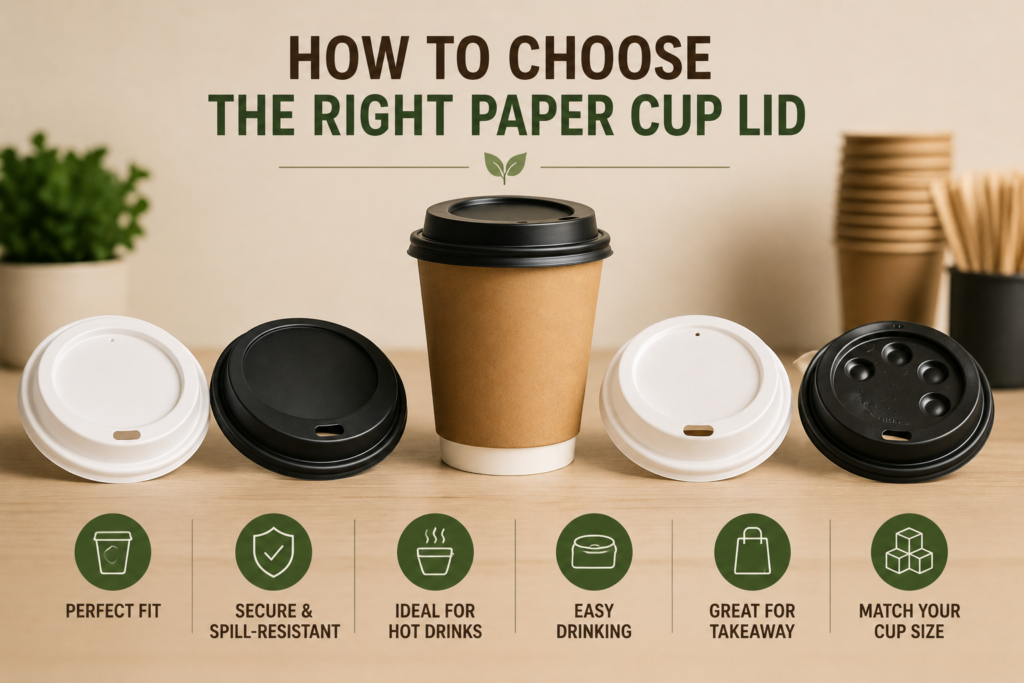
A paper cup is only as reliable as the lid that seals it. Mismatched lids and cups are a leading cause of spillages, customer complaints, and potential burns. When you browse the [Paper Cup Lids] available at Touch A Sky, you must consider the lid’s functionality.
- Sip Lids: The standard for hot drinks. They feature a raised spout for comfortable drinking and a tiny ventilation hole. This vent is critical; it allows steam to escape, preventing pressure build-up that could force the lid to pop off unexpectedly.
- Flat Lids (with straw slots): Primarily used for cold drinks, sodas, and iced teas.
- Dome Lids: Essential for drinks topped with whipped cream, iced frappes, or milkshakes, providing extra overhead space to protect the presentation of the beverage.
Always ensure you buy lids that correspond exactly to the rim diameter of your chosen cups. Often, 8oz cups have a smaller rim diameter (typically 80mm), while 10oz, 12oz, and 16oz cups share a larger rim diameter (typically 90mm), allowing businesses to streamline their lid inventory.
Buying Paper Cups Wholesale in the UK
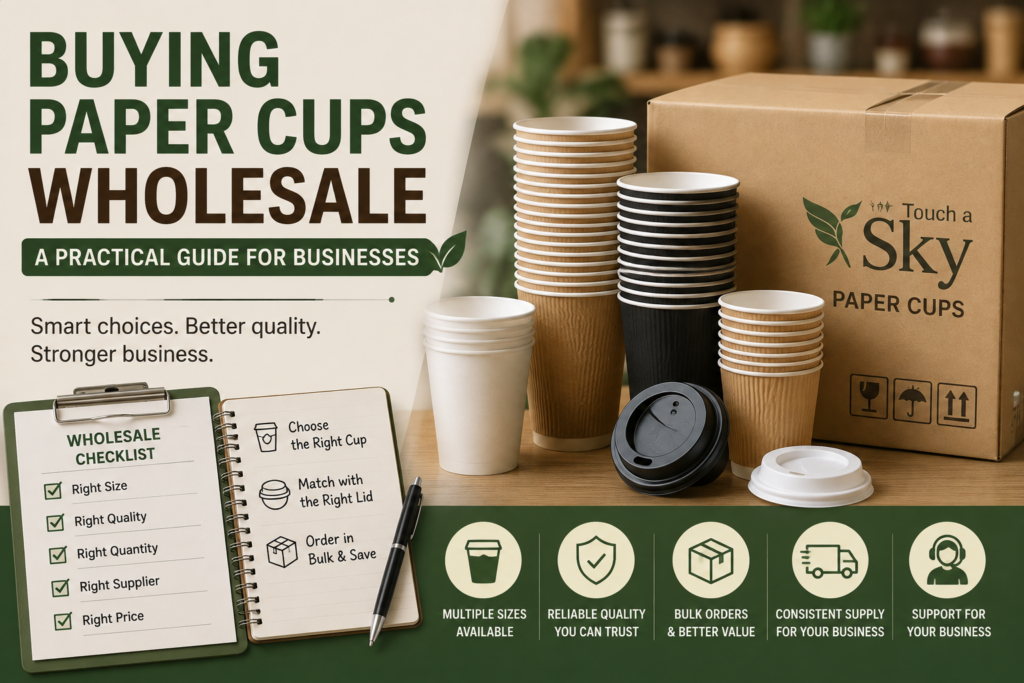
For any hospitality business, margins are tight. Purchasing [paper cups wholesale UK] direct from a supplier like Touch A Sky is one of the most effective ways to manage your packaging budget.
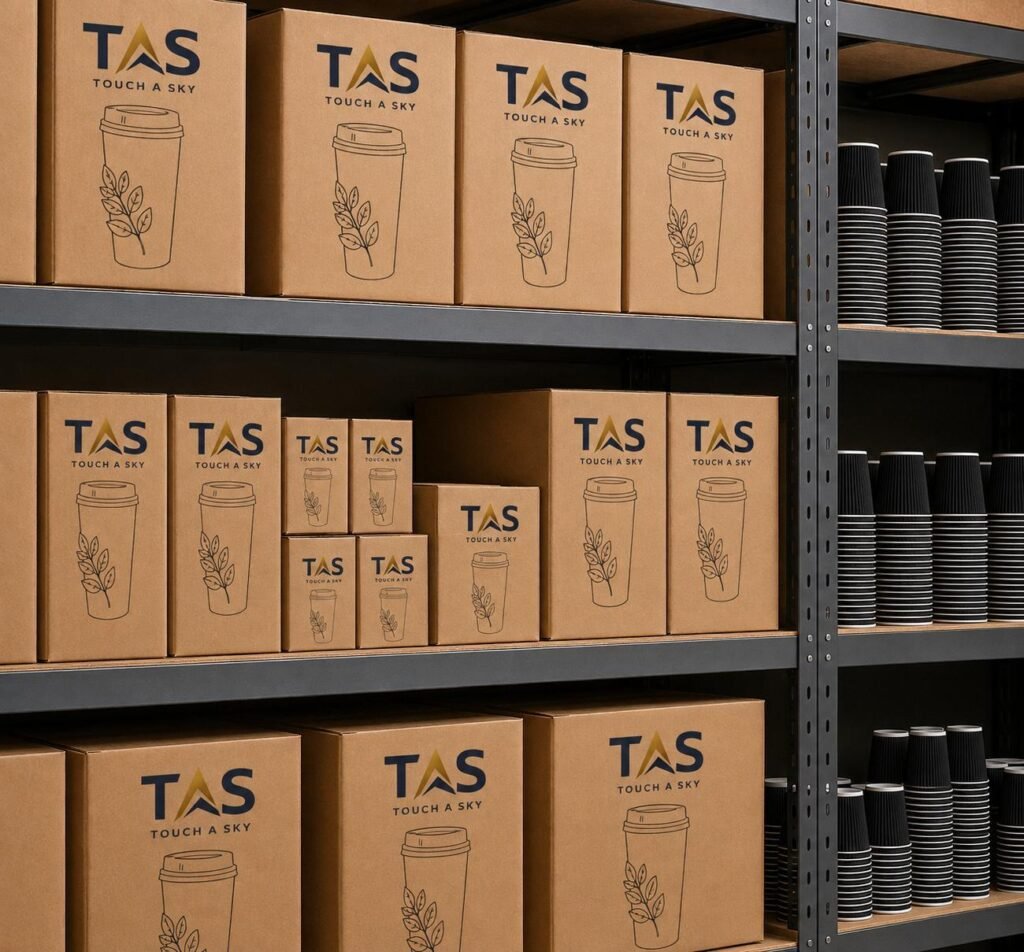
Buying in bulk not only reduces the unit cost per cup but also protects your business against supply chain disruptions. When ordering wholesale, consider your storage space. Large boxes of 1,000 to 2,000 cups take up significant room. If you operate a small footprint cafe, single wall cups take up less space per sleeve than ripple cups, due to the way they nest inside one another. However, you must weigh this against the operational speed gained by using double wall cups. To browse our full bulk options, explore our complete [Paper Cups category].
Key Factors Businesses Should Consider Before Ordering
Before placing a wholesale order, evaluate these critical operational factors:
- Handling and Separation (Nesting): During a morning rush, baristas need to grab a cup and separate it from the stack instantly. Poorly manufactured cups can stick together due to excess static or friction in the inner coating, slowing down service.
- Leak Resistance and Seam Strength: Look for cups with tightly rolled rims. The rim must provide a firm “snap” when a lid is applied. The bottom seal must also be robust enough to withstand being gripped firmly by a customer holding a hot beverage.
- Insulation Requirements: Assess your menu. If 80% of your sales are piping hot breakfast teas, single wall cups will result in burnt fingers and complaints. Double or triple wall cups are a necessary investment for hot-drink-heavy menus.
- Branding and Custom Printing: Disposable paper cups act as walking billboards for your business. An unbranded white cup does nothing to advertise your cafe once the customer walks out the door. Custom printing your logo, brand colours, and social media handles onto double wall cups is a highly effective, low-cost marketing strategy. Ensure your design is clear and represents the professional standard of the food and drink you serve.
Conclusion
Choosing the right disposable paper cups requires balancing customer comfort, beverage quality, and operational efficiency. By understanding the functional differences between 8oz and 12oz capacities, and knowing when to deploy single, double, or ripple wall constructions, UK businesses can elevate their takeaway service significantly.
At Touch A Sky, we understand the demands of the UK foodservice industry. We supply structurally sound, commercial-grade paper cups for businesses of all sizes. Ready to upgrade your packaging inventory? [Contact / Get a Quote] today to discuss your specific business needs.
Frequently Asked Questions (FAQ)
1. What is the difference between single wall and double wall paper cups? Single wall cups are made from one layer of coated paperboard and are best suited for cold drinks or require a cardboard sleeve for hot liquids. Double wall cups feature two layers of paperboard separated by an insulating air gap, keeping hot drinks warm while protecting the customer’s hands without needing an extra sleeve.
2. Which paper cup size is best for a flat white? An 8oz paper cup is the industry standard for a flat white. This size perfectly accommodates a double shot of espresso and the correct volume of micro-foamed milk, ensuring the coffee flavour is perfectly balanced and not diluted.
3. Do 12oz and 16oz paper cups use the same lids? In most commercial ranges, 12oz and 16oz paper cups share the same rim diameter (typically 90mm), meaning they can use the exact same lids. However, smaller 8oz cups usually have an 80mm rim and require a different lid size. Always check compatibility before purchasing.
4. Why is my paper cup lid popping off? Lids typically pop off due to pressure build-up from hot steam if the lid’s ventilation hole is blocked or poorly designed. It can also happen if the cup’s rolled rim is damaged or if you are using a lid that is fractionally the wrong size for the cup’s diameter.
5. Can I buy disposable paper cups in bulk for my cafe? Yes, purchasing paper cups wholesale is highly recommended for UK businesses. Buying in bulk reduces the cost per unit, ensures you have a consistent supply during busy periods, and allows for easier inventory management for cafes, restaurants, and catering events.